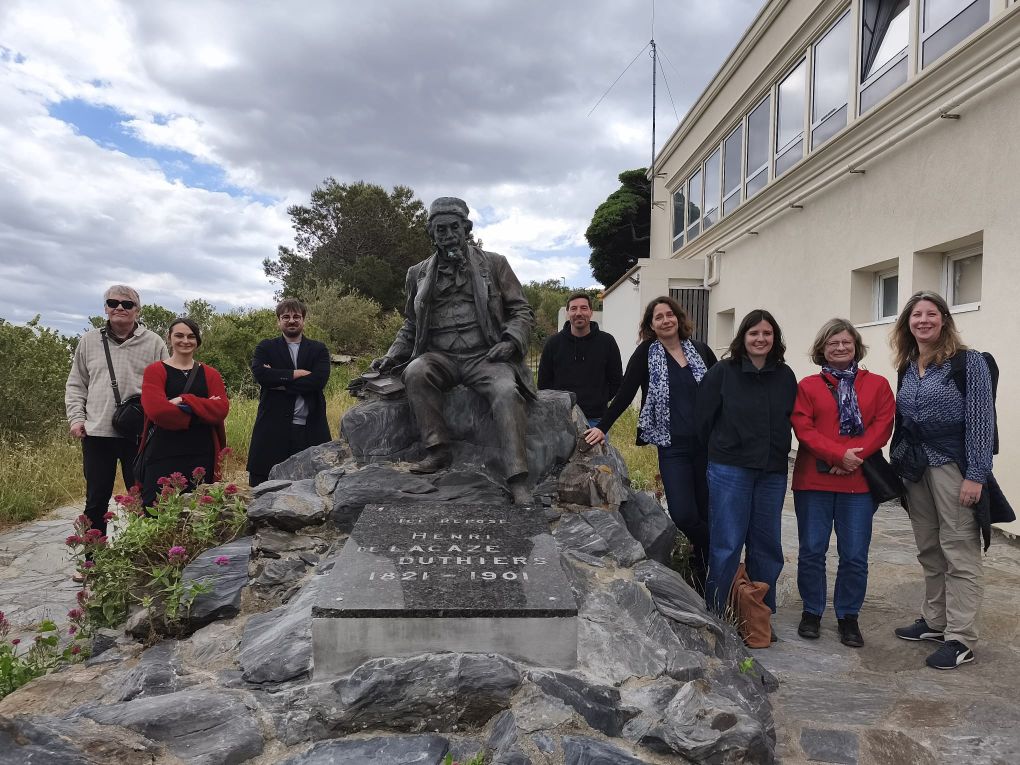
A week-long working session bringing together almost all members of the OCEANLINKS project took place at the marine research station in Banyuls-sur-Mer (Pyrénées-Orientales) from 3 to 8 May 2026. The aim was to work together on several key project tasks, to take part in a number of the station’s key activities, and to conduct interviews with scientists and technical staff at the Oceanographic Observatory.
The Banyuls-sur-Mer Oceanographic Observatory (OOB), also known as the Arago Laboratory, is a marine research station located on the Mediterranean coast since 1882, when it was founded by the zoologist Henri de Lacaze-Duthiers. Now affiliated with the CNRS and Sorbonne University, it has five main missions: research, teaching, hosting visiting scientists, observing the marine environment, local economic development and science outreach. The working week in Banyuls provided an opportunity to explore the various aspects of these missions and to further enrich the OCEANLINKS project’s databases.
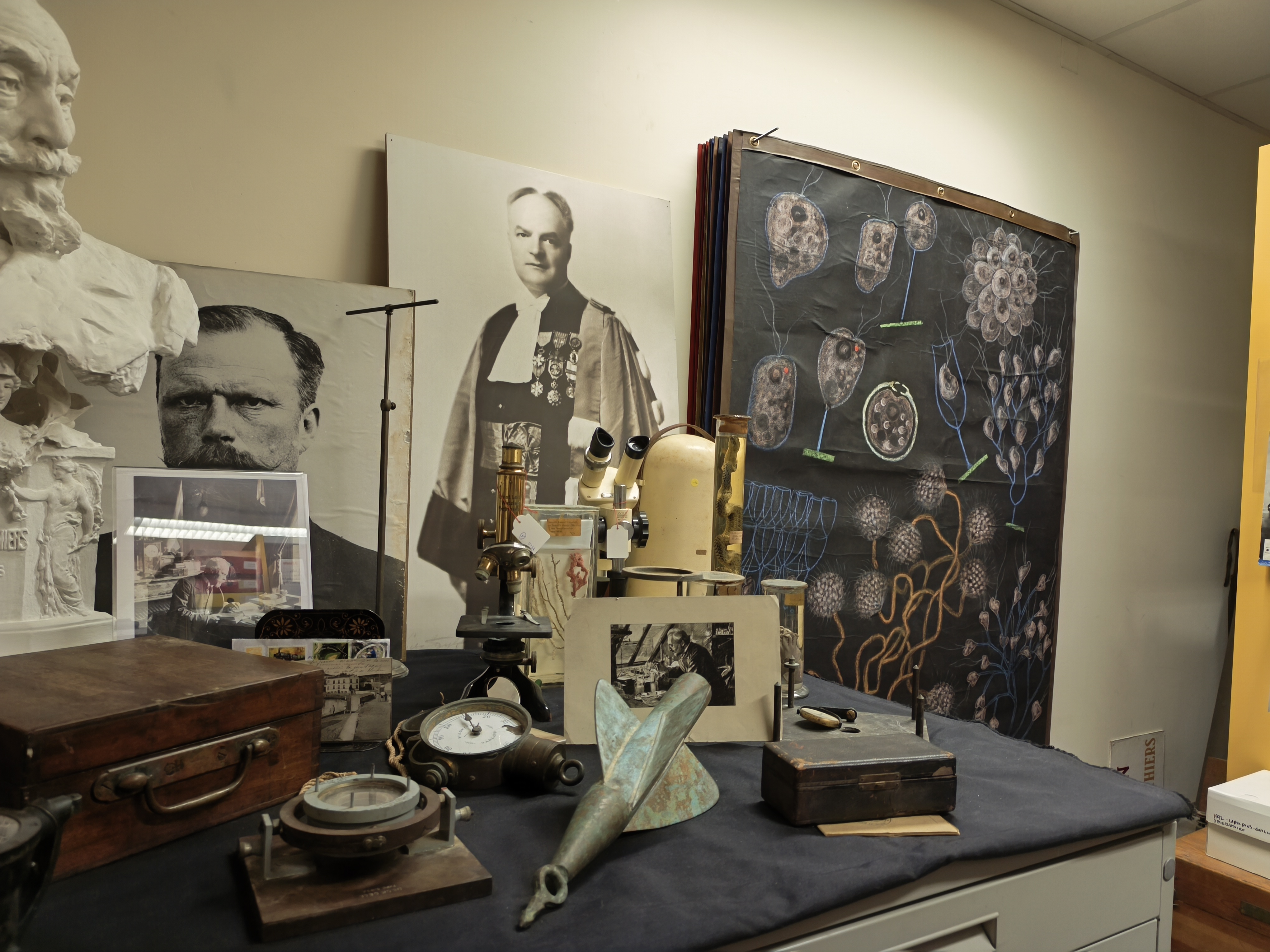
Visit to the library
The team first visited the library, which houses a large collection of historical archives and antique instruments, most of which come from the personal library of Henri de Lacaze-Duthiers, founder of the Banyuls-sur-Mer Oceanographic Observatory and the Roscoff Biological Station. Every member of the project team found something of interest among the documentary resources: expedition notebooks, biology books in Ukrainian, marine biology journals, books on the history of marine stations and oceanography, scientific instruments and period photographs. Many thanks once again to Sandrine Bodin and Véronique Arnaud for the tour!
Visit of the aquarium
The Biodiversarium is the aquarium attached to the OOB, which serves the dual purpose of being open to the public and functioning as a research aquarium. The Banyuls Aquarium is one of the oldest aquariums in France, established in 1885, shortly after the station was founded, with the aim of showcasing marine flora and fauna to the public. After several refurbishments, this historic aquarium, which was originally part of the station, closed in 2016 and was replaced by the Biodiversarium in 2017. Designed as a ‘laboratory showcase’, the aquarium displays only Mediterranean underwater habitats, as well as posters and explanatory and interactive panels on the station’s activities. Visitors were able to admire seahorses, dogfish, brown groupers, rays, corals and other species that inhabit the region’s seabed.
Visit of the research aquarium
The Biodiversarium building also houses a research aquarium designed for the storage of plankton and microalgae samples, the rearing of species bred in vitro and subsequently released into the sea, as well as for experiments of all kinds, particularly to test the effect of cosmetics or pesticides on the marine ecosystem. Some of the project members were given a tour of the research aquarium by Pascal Romans, curator of the Biodiversarium and head of the Shared Aquariology Service, and were able to observe the many species housed there. These included clownfish, a ‘model organism’ frequently used in laboratory research.
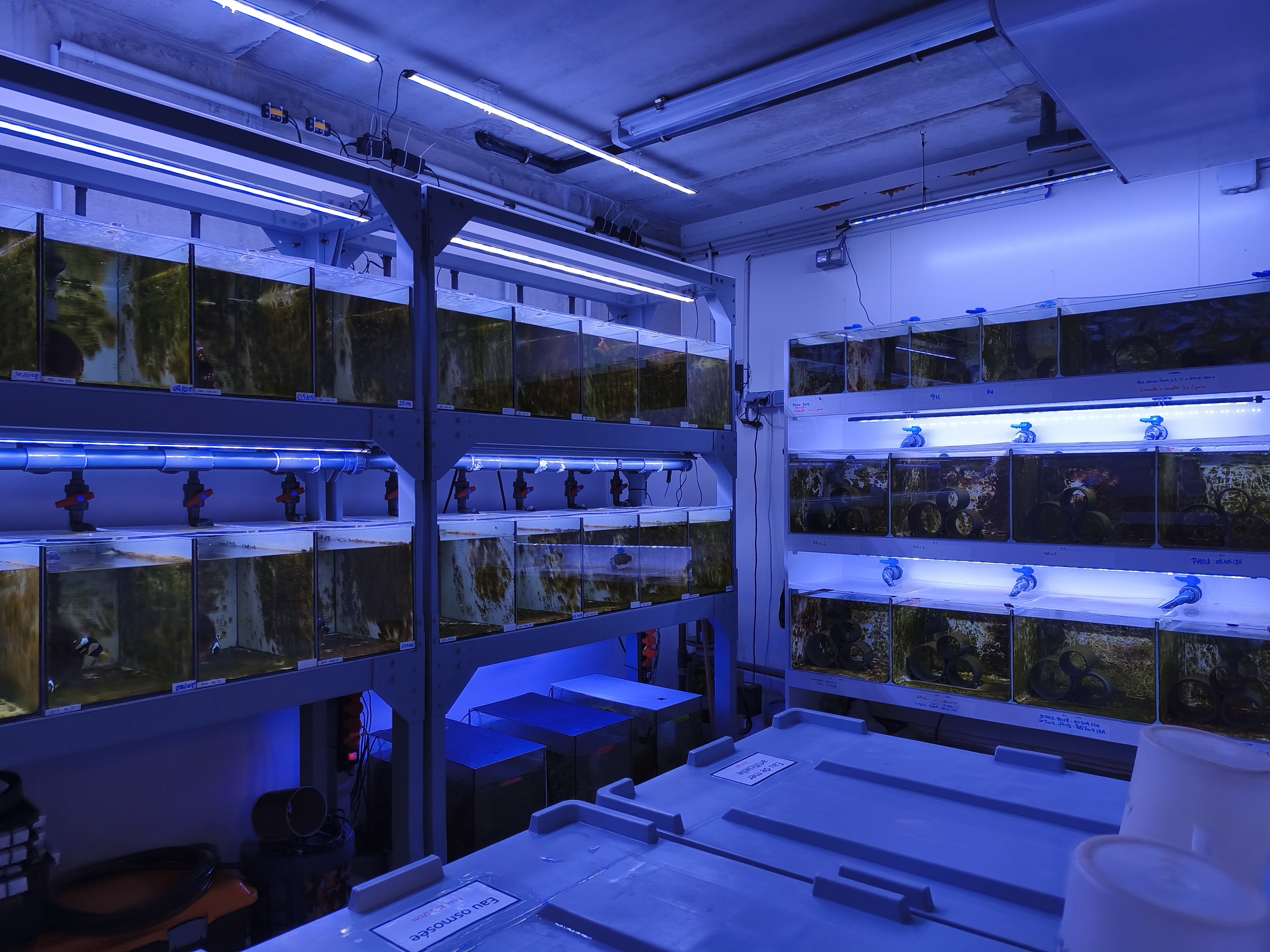
Work on the expeditions database
Alongside these visits, the project members took advantage of being together to expand the databases that will serve as a first-hand resource for the analyses produced within OCEANLINKS. The expedition database, maintained by Clarisse Didelon-Loiseau and Sébastien Haule, lists major oceanographic expeditions since the late 18th century. The team faced the challenge of compiling as much information as possible on these expeditions, in particular by identifying crew members and their roles, their dates of birth and death, their towns of origin, and so on. This serves as proof that oceanographic expeditions were, from very early on, highly international in nature!
Work on the marine stations database
The OCEANLINKS project also aims to create a database listing all marine stations worldwide, a task being carried out by Marion Maisonobe, Hughes Pécout and Mattia Bunel through a partnership with the World Association of Marine Stations (link). The aim of the week was to review the information gathered and compare it with open data from the Wikidata and OSM databases, in order to create as comprehensive a database as possible.
Interviews with scientists at the station
Having arrived a week before the other project members, Mayline Strouk took the opportunity to collect first-hand ethnographic data, based on observations made at the station and interviews with researchers and technical staff. She was thus able to speak with Yves Desdevises, the director of the OOB, as well as engineers and technicians in charge of observation activities, researchers and lecturers, a scientific diver, and the scientific director of the Cerbère-Banyuls Marine Reserve. The aim of these interviews was to trace their paths to the Banyuls station, to explore their experiences and field practices, as well as the challenges of their research. Particular emphasis was placed on two specific aspects of the Banyuls station: environmental observation activities, notably from the Sola buoy opposite the harbour, and the tradition of research in the Antarctic and sub-Antarctic regions.
Trip out to sea
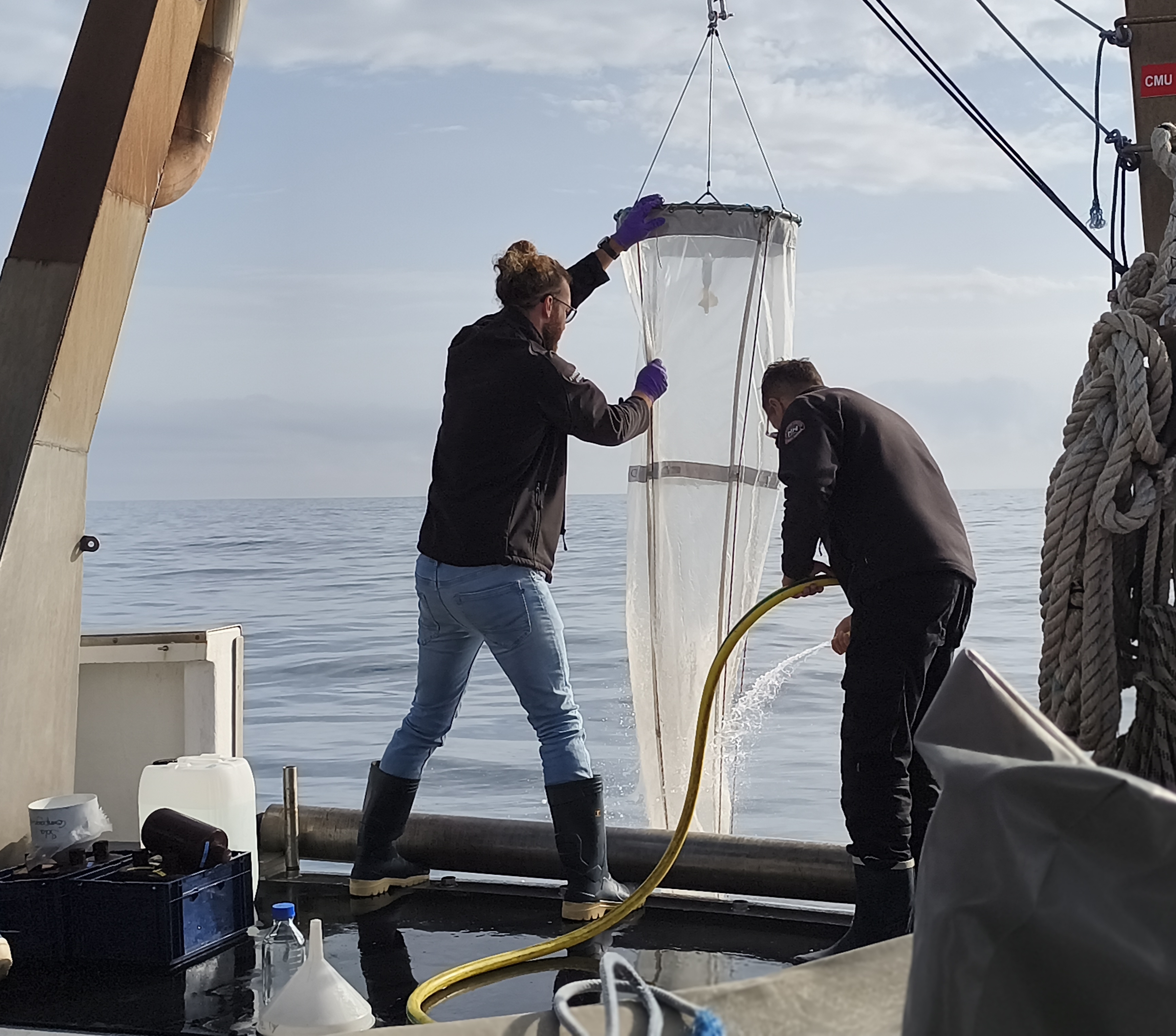
At last, Mayline was able to board the station’s vessel, the Néréis II, to take part in the weekly collection of various samples as part of the OOB’s observation mission around the Sola point. On that day, the aim was to collect water and plankton samples for the observatory’s Remimed platform, station researchers and biology students. Mayline was also able to carry out a few other observations, both in the station’s laboratories and during the consultation meeting on the extension of the Cerbère-Banyuls Marine Reserve, in which the OOB is also involved.